
Key facts
- NOAA Fisheries proposed 2027–2028 Gulf of Alaska groundfish harvest specifications, officials said.1 The proposed specifications establish a 465,714-ton catch limit, officials said.1 The proposed rule was filed on 27 November 2026 with the Federal Register, officials said.1
- The proposed specifications are administered by the National Marine Fisheries Service (NMFS) under the Magnuson-Stevens Fishery Conservation and Management Act, officials said.1 The proposed specifications establish annual harvest baselines for groundfish species across the Western, Central, and Eastern Gulf of Alaska (GOA) management districts, officials said.1 Operating within the statutory Optimum Yield range of 116,000 to 800,000 metric tons (mt), the proposed package specifies a total overfishing level (OFL) of 651,257 mt and an acceptable biological catch (ABC) of 541,176 mt across all targeted stocks for both the 2027 and 2028 calendar years, officials said.1
- The rule adopts Biologically-informed Recommended Distribution (BRD) terminology, officials said.1 Recommended by the North Pacific Fishery Management Council, the BRD designation replaces earlier ambiguous subarea ABC labels, officials said.1 The rule details preparatory steps for Amendment 128 to the GOA Groundfish FMP regarding small sablefish discard management, officials said.1 In the sablefish Individual Fishing Quota (IFQ) fixed gear fishery, vessels will be permitted to carefully release sablefish measuring under 22 inches (55.88 cm) in fork length, officials said.1 The release program rolls out in two distinct phases: voluntary release without penalty deductions in 2027, followed by formal sablefish discard allowances (SDAs) and discard mortality accounting beginning in 2028 under regulatory standards maintained at Title 50 CFR Part 679, officials said.1
NOAA Fisheries proposed 2027–2028 Gulf of Alaska groundfish harvest specifications, officials said..1 The proposed specifications establish a 465,714-ton catch limit, officials said..1 The proposed rule was filed on 27 November 2026 with the Federal Register, officials said.1
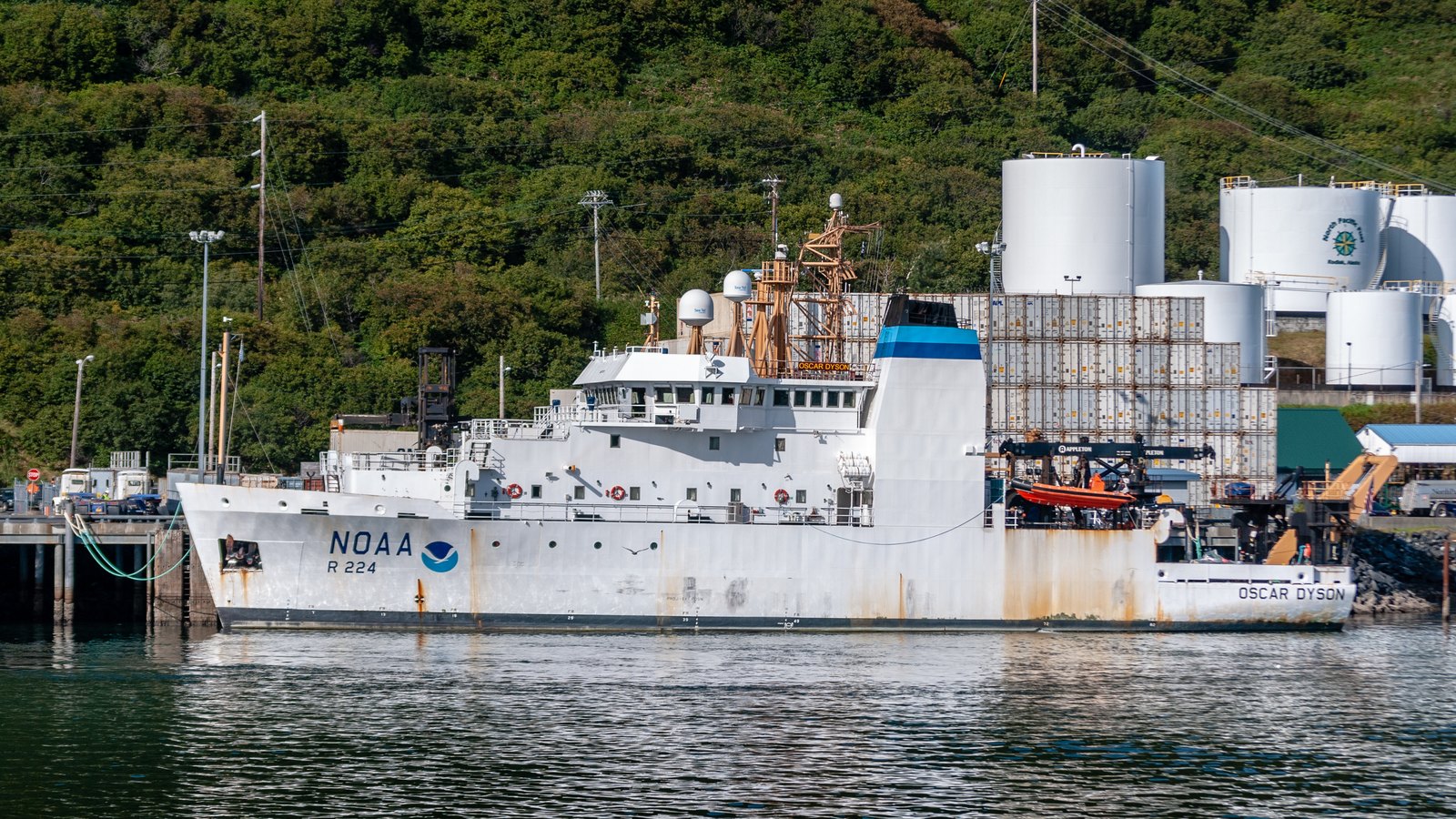
The proposed rule establishes 2027 and 2028 groundfish harvest specifications for the Gulf of Alaska Exclusive Economic Zone, officials said..1 The proposed total allowable catch is 465,714 metric tons..1 The regulatory action shapes marine ecological modeling, academic survey vessel charters, and institutional compliance across North Pacific oceanographic research programs, officials said.1
Specifications And Stock Allocations
The proposed specifications are administered by the National Marine Fisheries Service (NMFS) under the Magnuson-Stevens Fishery Conservation and Management Act, officials said..1 The proposed specifications establish annual harvest baselines for groundfish species across the Western, Central, and Eastern Gulf of Alaska (GOA) management districts, officials said..1 Operating within the statutory Optimum Yield range of 116,000 to 800,000 metric tons (mt), the proposed package specifies a total overfishing level (OFL) of 651,257 mt and an acceptable biological catch (ABC) of 541,176 mt across all targeted stocks for both the 2027 and 2028 calendar years, officials said.1
Harvest limits are governed by the Fishery Management Plan for Groundfish of the Gulf of Alaska, which mandates formal consultation between federal regulators and regional management authorities, officials said..1 The proposed allocation tables show Walleye pollock and Pacific cod as primary targets of harvest controls, officials said.1
For pollock, the Western, Central, and West Yakutat (W/C/WYK) stock area receives an ABC of 133,075 mt, officials said..1 Following a mandatory deduction of 2.5 percent (3,326 mt) for the State of Alaska guideline harvest level (GHL) fishery, the net federal Total Allowable Catch (TAC) stands at 129,749 mt, officials said..1 Pacific cod allocations are established with a Gulf-wide OFL of 38,812 mt, an ABC of 32,209 mt, and a net TAC of 23,359 mt apportioned across Western, Central, and Eastern districts, officials said.1
Sablefish Release Program And Stock Assessments
The rule adopts Biologically-informed Recommended Distribution (BRD) terminology, officials said..1 Recommended by the North Pacific Fishery Management Council, the BRD designation replaces earlier ambiguous subarea ABC labels, officials said..1 The rule details preparatory steps for Amendment 128 to the GOA Groundfish FMP regarding small sablefish discard management, officials said..1 In the sablefish Individual Fishing Quota (IFQ) fixed gear fishery, vessels will be permitted to carefully release sablefish measuring under 22 inches (55.88 cm) in fork length, officials said..1 The release program rolls out in two distinct phases: voluntary release without penalty deductions in 2027, followed by formal sablefish discard allowances (SDAs) and discard mortality accounting beginning in 2028 under regulatory standards maintained at Title 50 CFR Part 679, officials said.1
The numerical foundations of the 2027 and 2028 specifications derive from scientific stock assessments conducted by the Alaska Fisheries Science Center (AFSC), officials said.1 AFSC scientists employ age-structured statistical catch-at-age models, bottom trawl survey time series, and acoustic monitoring data to establish recruitment trajectories and sustainable fishing mortality reference points, officials said..1 Development of the proposed rule followed unique assessment conditions resulting from logistical disruptions during the 2025 assessment cycle, which prevented the Groundfish Plan Team from finalizing complete updates for several minor stocks, officials said..1 Regulators bridged data intervals by projecting forward verified baseline assessments from the final 2026–2027 harvest specifications, coupled with specialized stock evaluations for Pacific cod and harvest projections for deep-water flatfish completed in early 2026, officials said.1
Council Meeting And Comments
The North Pacific Fishery Management Council takes up the final numbers at its Dec. 4-9 meeting in Anchorage..2 For each stock, scientists set a ceiling called the acceptable biological catch..2 The council then recommends the catch limit fleets fish to, which cannot go above it..2 For pollock in the western and central Gulf and West Yakutat, the Gulf of Alaska Groundfish Plan Team recommended this month a 2027 ceiling of 155,551 metric tons..2 The 2027 pollock ceiling is about 17% above the 133,075 the proposal would keep for both years..2 For 2028, the panel recommended 106,221 tons, about 20% below it..2 The panel recommended cutting the Alaska-wide sablefish ceiling about 20%, to 37,436 tons from 47,008..2 Gulf shares of the sablefish ceiling add up to 18,718 tons..2 The proposal keeps the Gulf’s sablefish limit at this year’s 22,550.2 NMFS says it invited Alaska Native tribal governments to consult on the proposal before the council’s October meeting and received no responses..2 The Organized Village of Kasaan answered a later invitation on the council’s November and December agenda items..2 Comments on the proposal are due Dec. 30.2